
If you’re moving to Raleigh, NC, you’ve probably already read the highlights: great jobs, good schools, mild winters, a reasonable drive to both the beach and the mountains. All true. We’d sign every word of it.
But after more than a decade of helping people settle into the Triangle, we’ve noticed that the relocation guides tend to skip the parts that actually surprise people. Not the dealbreakers. The small, slightly absurd, entirely local things you only learn by living here.
So here’s what nobody tells you about moving to Raleigh, from people who’ve watched a lot of families figure it out in real time.
 1. A “Raleigh” address doesn’t mean you live in Raleigh
This is the big one, and it costs people real money. A Raleigh mailing address is a postal designation, not a jurisdiction. Plenty of homes with “Raleigh, NC” on the envelope sit outside city limits in unincorporated Wake County, and some Triangle homes carry one town’s mailing address while sitting in another town entirely.
Why it matters: city limits decide whether you pay a city tax rate on top of the county rate, whether you’re on city water and sewer or a well and septic system, who picks up your trash, and which zoning rules apply when you want to add a pool or a garage apartment.
The fix is simple. Before you fall in love with a house, look up the parcel on the Wake County real estate portal and confirm the jurisdiction. (Or ask us. We check this on every home we show.)
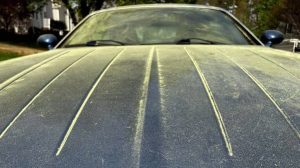
Somewhere around late March, the Triangle turns chartreuse. Cars, porches, dogs, the surface of your coffee if you sit outside long enough. That yellow film comes mostly from loblolly pines, and according to NC State Extension it typically peaks around early April.
Here’s the part nobody mentions: pine pollen is mostly harmless. Its grains are large and not very allergenic. The pollen that actually makes you miserable comes from oaks, maples and other hardwoods, and it’s invisible. Raleigh routinely ranks among the toughest U.S. metros for allergy sufferers, so if you have allergies, start your medication before the yellow shows up, not after.
Also, don’t wash your car in March. You’ll just do it again in a week.
 3. “Inside the Beltline” is a neighborhood, a price point and a personality
I-440 loops around central Raleigh and is universally called the Beltline. Locals still give directions using the “Inner” and “Outer” Beltline (the inner lanes run clockwise), which is confusing until it suddenly isn’t.
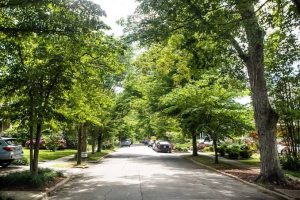
More importantly, “ITB,” or inside the Beltline, is shorthand for Raleigh’s older, walkable, tree-canopied neighborhoods like Five Points, Oakwood and Hayes Barton. ITB homes tend to be older, smaller and pricier per square foot. Outside the Beltline, you get newer construction and more space for the money. Neither is better; they’re just very different lives.
Further out, I-540 forms a second, larger loop, and parts of it are toll roads. If you’ll commute on it, get an NC Quick Pass early.
If you’re relocating from a city where HOAs are rare, prepare to meet a lot of them. Most suburban neighborhoods built in the last few decades have a homeowners association, and many newer communities have amenity centers with pools, clubhouses and walking trails.
The dues are usually the easy part. The covenants are where the surprises live: fence height and material, paint colors, where you can park a boat or work truck, whether you can rent the house out, and what counts as an approved mailbox. Read the restrictive covenants before you’re under contract, not after. If something on your must-have list (a home business, a backyard workshop, an RV) is a deal-breaker, we’ll flag it early.
Wake County runs one of the country’s larger year-round school programs. At year-round schools, the calendar starts in July, and students are divided into four tracks that rotate through roughly nine weeks of class followed by three weeks off. That means your family might take a three-week “track out” break in October while your neighbor’s kids are in class.
Some families love the rhythm; others find the childcare logistics tricky. Either way, it’s worth knowing which calendar your assigned school uses before you buy. Also know that Wake County adjusts school assignments as it grows, so confirm current assignments for any address you’re considering rather than relying on a listing description.
North Carolina charges an annual property tax on vehicles, and it’s billed together with your registration renewal through the state’s Tag & Tax Together program. You can’t renew your tags without paying it. The amount depends on your vehicle’s value and the tax rates where you live.
While you’re dealing with the DMV, note that new residents need a North Carolina driver’s license within 60 days, and vehicles registered in Wake County need an annual inspection. Book DMV appointments early. Everyone learns this one the hard way.
Property values rose quickly here, and after a bumpy 2024 reappraisal, Wake County shortened its revaluation cycle: the next revaluation takes effect January 1, 2027, with revaluations every two years after that. The goal is fewer big jumps and more gradual adjustments.
For buyers, the practical takeaway is to budget using the current county rate plus any city or town rate, and to expect your assessed value to track the market more closely than it might in other places.
 8. One inch of snow is a civic event
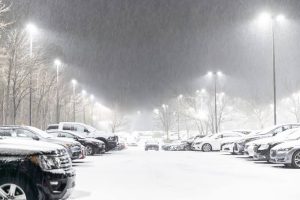
Winters are genuinely mild. That’s the good news. The other news is that when a real winter storm is forecast, grocery stores run out of bread and milk, schools close, and the roads empty out. It isn’t panic so much as tradition, and frankly, after a few years, you’ll stock up too.
Summers, on the other hand, are humid in a way that’s hard to describe until you’ve walked to your car at 9 p.m. in July. Inland Raleigh also catches the edges of hurricanes most years: usually heavy rain and wind rather than catastrophe, but worth a look at drainage and tree coverage when you buy. And fall? Fall here is spectacular. Most locals will tell you October is the reason they stay.
Newcomers often think of the area as “Raleigh” with suburbs. In practice, Raleigh, Durham, Chapel Hill, Cary, Apex, Wake Forest, Holly Springs and the rest each have their own downtowns, tax rates, personalities and rivalries. Durham is different from Cary in ways that matter far more than the 25-minute drive between them.
And you will be asked, sooner or later, whether you’re a State, Carolina or Duke fan. Choose carefully. There are no neutral answers.
Is Raleigh a good place to move to?
For most people, yes. Raleigh offers a strong job market anchored by Research Triangle Park, mild winters, good access to both the coast and the mountains, and a wide range of neighborhoods. The best fit depends on your commute, school needs and how much space you want.
How do I know if a home is inside Raleigh city limits?
Don’t rely on the mailing address. Look up the parcel on the Wake County real estate portal, which shows the jurisdiction and which tax rates apply. Your agent should confirm this before you write an offer.
When is pollen season in Raleigh?
Tree pollen starts in late February or early March, and the visible yellow pine pollen usually peaks in late March to early April. Grass pollen follows in late spring and summer, and weed pollen runs into fall.
What does “ITB” mean in Raleigh?
ITB stands for “inside the Beltline,” the area enclosed by I-440. It refers to Raleigh’s older, central neighborhoods near downtown.
Do Wake County schools run year-round?
Some do. Wake County has both traditional-calendar and year-round schools. Year-round schools start in July and rotate students through tracks with three-week breaks. Check the calendar of your assigned school for any address you’re considering.
Do you pay car taxes in North Carolina?
Yes. North Carolina charges an annual vehicle property tax, collected with your registration renewal. New residents must also get an NC driver’s license within 60 days.
Raleigh is an easy place to love and a slightly tricky place to buy if you don’t know the local quirks. City limits, HOA covenants, school calendars and tax rates all live in the fine print, and they shape your daily life far more than the paint colors or the kitchen backsplash.
That’s where we come in. At Carlton Realty Co., most of our clients come to us through referrals, and a lot of them are newcomers who wanted someone to tell them the things nobody else would. If you’re thinking about moving to Raleigh or anywhere in the Triangle, schedule a no-pressure call and we’ll help you figure out where you’ll actually be happy, pollen and all.